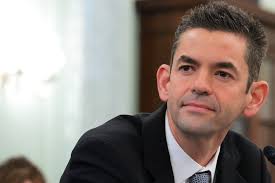
Jared Isaacman
In a major moment for the future of American space exploration, billionaire entrepreneu r Jared Isaacman has finally been confirmed as the new head of NASA after a long and dramatic nomination process. The U.S. Senate approved his appointment on December 17, 2025, with a 67-30 vote, making him the 15th Administrator of NASA under the leadership of President Donald Trump.
This decision brings an end to nearly a year of uncertainty at the space agency, which has been operating without a permanent leader while it works on bold missions like returning astronauts to the Moon and planning future journeys to Mars.

🚀 Who Is Jared Isaacman?
Jared Isaacman is an American billionaire, pilot, and commercial astronaut who first rose to fame as the founder of Shift4 Payments, a major payment processing company. He also started Draken International, an aviation company that trains fighter pilots for military exercises.
But Isaacman’s connection to space goes beyond business. He has made headlines by flying into orbit twice on SpaceX missions. In 2021, he led Inspiration4 — the first all-civilian spaceflight. Later, he commanded the Polaris Dawn mission, where he became the first private astronaut to conduct a spacewalk.
These unique experiences helped shape his reputation as someone deeply interested in human spaceflight — even though he had never worked inside NASA before.
🧑💼 A Long and Unusual Confirmation Process
Isaacman’s road to becoming NASA Administrator was far from simple — and unusual for this government position:
Trump first nominated him in late 2024 to lead NASA shortly before taking office.
In May 2025, Trump abruptly withdrew the nomination during a high-profile feud involving tech leaders and political allies. This left NASA without a permanent administrator for months.
Then, in November 2025, President Trump renominated Isaacman for the role, restarting the confirmation process.
After another Senate hearing, lawmakers finally agreed on Isaacman’s appointment, marking the end of a dramatic saga that drew attention not just in Washington, but across the global space community.
🌍 What This Means for NASA
Isaacman steps into his new leadership role at a crucial time for NASA and for U.S. space policy. The agency has important goals ahead, including:
Returning humans to the Moon through the Artemis program.
Developing technology for future missions to Mars.
Encouraging collaboration with commercial space companies like SpaceX — which has been Isaacman’s partner in his own space missions.
During his Senate confirmation hearing, Isaacman emphasized the need to outpace competitors like China in space exploration and to push NASA forward with urgency and innovation.
However, some lawmakers raised concerns about his close ties to SpaceX CEO Elon Musk and whether those relationships could influence NASA’s decisions.

✨ A New Kind of NASA Leader
Isaacman is not a typical NASA Administrator. Unlike many of his predecessors, he did not rise through the ranks of government, military, or NASA itself. Instead, he comes from the private business world and commercial spaceflight — a background that reflects a changing era in space exploration where public and private sectors work more closely than ever.
His appointment shows a shift toward entrepreneurial leadership at NASA, with a focus on speed, innovation, and strong partnerships with companies pushing the boundaries of technology and exploration.

🌙 Looking Ahead
With his confirmation now complete, Jared Isaacman faces major challenges and opportunities as the new NASA Administrator. He inherits an agency with ambitious goals but also budget pressures and tight deadlines. How he balances commercial involvement, scientific research, and national priorities will be watched closely — not just in the United States, but around the world.
As NASA enters this next chapter, Isaacman’s leadership may redefine how humanity explores space and what the future of space travel could look like for generations to come.